



















[Spoiler Alert: Key plot points will be discussed.]
“I am obscene to you, but to myself, I simply am.”
Guillermo del Toro’s “Frankenstein” explores themes of isolation, the human condition, and the responsibility of creation through a beautifully crafted film. The visuals are surreal and haunting, contributing to the deep emotion the work evokes. Importantly, the movie offers an adaptation more appealing to modern audiences, rather than focusing on the issues of the Romantic Era, when the classic novel was originally written. “Frankenstein” is a classic tale, capturing the attention of a wide range of people and connecting with many.
The film has received major praise, receiving dozens of award nominations and wins. It was nominated for nine Oscars in categories including, but not limited to: Best Costume Design, Best Cinematography, Best Original Score, Best Supporting Actor (Jacob Elordi), and Best Adapted Screenplay (Guillermo del Toro). It also won a MUAHS for Best Special Makeup and Prosthetic and Jacob Elordi won a Critic’s Choice Award for Best Supporting Actor.
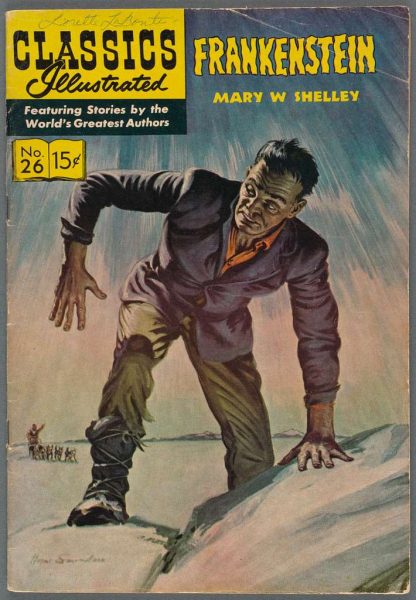
The film differs from the original book by Mary Shelley in many considerable ways, but when separated from the novel, can be enjoyed as its own masterpiece. The film shifts the focus to be more sympathetic to the classic monster, revolving around a more innocent creature (played by Jacob Elordi) and a more actively villainous creator in the form of Victor Frankenstein (played by Oscar Issac). Instead of the creature murdering Elizabeth Lavenza as he does in the book, Victor Frankenstein shoots Elizabeth on accident, while trying to kill his creation. Similarly, in the movie, the creature never murders anyone deliberately; whereas, in the book he became a murderer to get revenge on his cruel creator.
A major theme of both the movie and book is facing the consequences of “playing God.” Victor had an obsessive drive to conquer death and accomplish things his abusive father never could. This leads him to dedicate his life to creating this creature, but he instead treats his creation in the same abusive manner as his father treated him. Victor’s negligence leads to the downfall of himself and everyone around him. The abandonment and abuse leads the creature to become monstrous, and the film eventually shows how Victor was the true monster all along. A key message of the new adaptation is forgiveness; the creature forgives Victor, breaking the cycle of violence. The film has a more peaceful ending compared to the book, ending with the two finding mutual forgiveness, offering a more optimistic ending.
The film has left a lasting impression with many who watched it, including sophomore Lila Smith, who was inspired to create a halloween costume based off of a notable character, Elizabeth. Elizabeth serves as a pure soul, a bridge to the creature’s humanity. Lila explained, ”The symbolism in the movie is really cool. All of Elizabeth’s costumes tie back to the bugs she’s interested in and how she’s trapped. People would rather observe her than get close to her.”
Elizabeth portrays an important message of the film, exhibiting the tragedy of a world that rejects empathy. The costuming of the movie is one of the most impressive and powerful parts of the film, and it serves as a way to convey a message through beautiful symbolism, while remaining historically accurate in a way that many films today do not. Lila elaborated on the effect of the costuming, “In Victor’s costumes, he’s always wearing red somewhere, and it ties back to his mom, but also to the blood he has on his hands.”
These important themes of the work reflect del Toro and his actors’ dedication to their craft. This new era of adaptations is an important progression in film after a history of sub-par renditions of classic works in recent years.