

















As the college application process comes to an end for the class of 2026, three seniors, Natalie Kelsey, Meg Lewis, and Zara Dawodu, shared advice and talked about the sometimes challenging but simultaneously meaningful process they just completed.
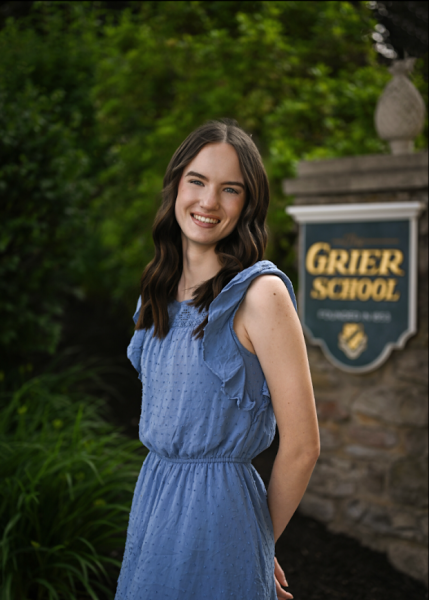
Just like many other seniors in her class, Natalie Kelsey started the college process at the beginning of her school experience by taking difficult classes and performing well in those classes. As she said, the real “gearing up” began in tenth grade, when she visited some colleges that caught her interest.
Kelsey’s top school for a while was Cornell, but, when she visited, it didn’t seem to fit her. “It was just not my vibe,” said Kelsey. This is a trend many students experience throughout the college process; initial dream schools, for most, aren’t necessarily the best school for them in the long run.
Continuing the process, she visited many schools in tenth grade, and she began Grier’s college counseling at the end of junior year. Reflecting on the time at which Kelsey started the process, she said, “It’s totally okay to start touring junior or senior year. It’s just easier to start earlier.”
Most seniors agree to start the process earlier rather than later. Kelsey also began other aspects of the process, such as her common application essay, over the summer. She recommended that rising seniors follow her lead. “Just do it over the summer, because you’re not going to want to be doing it while you’re doing your classes,” she said. “You have to keep your grades up senior year.”
Kelsey continued by recommending to complete the supplemental essays early as well, especially if it’s possible to do over the summer. “Usually they’re optional,” she said, “but always do them because it shows interest.”
According to Kelsey, some schools value demonstrated interest, which is where students participate in events put on by the college before and leading up to applications. This is something Kelsey started to pay attention to junior year. She urged students to check specific schools’ common data set to begin demonstrating interest in colleges that consider that in the application process. “Doing virtual things for those schools, listening in on zoom sessions, signing up for emails, that’s what makes you look good to those colleges,” Kelsey said.
Like many students at Grier, Kelsey was well prepared and supported throughout the college process. However, like many other students, she was not accepted into her top school. When asked to share advice for those who feel unsuccessful unless they get accepted into their top school, she urged students to shift their mindset. “If you like a college, that’s totally fine. If you have a dream school, that’s totally fine. But, regardless of whether you get in or not, that’s creating a false expectation of what that college is truly going to be,” she said. “If you haven’t visited [the school] or you have visited and you really liked it, now you’re putting that school on a pedestal.”
Kelsey continued by reassuring students not to be afraid to share their results with their friends, good or bad. She reiterated that there are thousands and thousands of students in our country who have experienced similar situations, and it can only help to talk with others. “It just makes it easier to tell the truth and kind of get support from your friends,” she said. “You don’t have to be afraid to tell people what happened.”
Despite the undoubtedly hard work that goes into the college process, Kelsey said that students should not be afraid of the college process. “It can be scary, and I understand that,” she said. “But, at the end of the day, it’s going to be what it’s going to be, and everybody else is going through the same things as you.”
—-
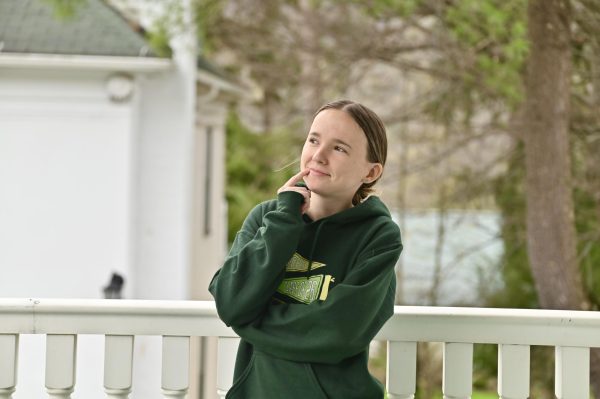
Senior, Meg Lewis, was accepted to 12 of the 15 schools she applied to. Lewis began her main application steps over the summer with the basics of her essay and crafting a college list. Like many of her fellow seniors, Lewis also encouraged others to begin their essays in the summer going into senior year. “Even though it was kind of pain staking,” she said, “it helped me so much when I came to school and I had to apply because you have so much work on top of that.”
Additionally, Lewis recommended that students further strengthen their applications junior year because 11th grade is the most important year of high school in terms of your transcript. “Try and do as many things as you possibly can in your junior year,” she said.
Lewis, herself, was a member of 4-5 clubs and had little free time. She stressed the importance of not slacking off senior year, and maintaining commitment to clubs, classes, and sports. “I feel like that really is rewarding once you see that you get into these colleges,” she added.
In the end, Lewis decided to attend the Savannah College of Art and Design, which was her second choice school. She ended her advice by reiterating that students should not fear the college process, but they should commit to building up their college resume junior year and carry that dedication into senior year.
—–
For Zara Dawodu, a senior who has expressed interest in many different areas at Grier and who did get into her top school, the college application process officially started in September of her senior year. However, before that, she worked continuously on receiving awards and completing extracurriculars. When Dawodu got to September, she focused on essays and various other writing requirements.
Although Dawodu did, eventually, get accepted into her top college, she can understand a bit about what the flip side is like and extended advice to those who didn’t get that experience. “I would probably say that, and I know this is so cliche, but, really, everything will work out the way it’s meant to be,” she said. “I originally got deferred from my top choice, and I was really sad, but eventually you understand that you can’t control everything.”
Continuing to talk about the college process, Dawodu shared more about how she was able to receive her acceptances. “Truthfully, if you’re really passionate about that subject, I really, truly believe that can overpower crazy awards or crazy nonprofits or crazy grades anytime,” she said.
Passion was one of the things she highlighted again and again; she emphasized that truthful enjoyment can overrule an inauthentic, jam-packed application. “Whatever you apply towards, you have to genuinely like it and be able to show you like it through both your extracurriculars, awards, classes, but also your essays,” she said. “It shouldn’t be inauthentic. I think that’s kind of the easiest way to get rejected.”
Although the college process is objectively difficult, Dawodu mentioned the simultaneous opportunities for self-reflection. “I, personally, really enjoyed it, because I like writing about myself. I think you just do so much self reflection during the college admission process,” she said. “I feel like I understand myself more and what I want for myself in the future.”
Another thing Dawodu highlighted in her advice was that sometimes it is okay to not know. Not everyone has a set idea about their major or life after high school, and she believes that is totally okay. As a freshman, Dawodu said she “was so sure” she wanted to do biomedical engineering. Then, in 10th grade, she wanted to do biophysics, and she, again, was “so sure” that she was going to be a neurosurgeon or a cardiac heart surgeon. Currently, Dawodu’s not entirely sure what she wants to do, but she said she likes biology and math. However, it is not an uncomfortable thought, and she partially enjoys the freedom of uncertainty. “I kind of like that freedom, “ she stated, “It’s a lot less pressure.”
She finally reassured students that they can only do so much with the college application process. She, like many other seniors, agrees that the college process is not something to fear, and it can actually be enjoyable at times. “Wherever you go to college, you can always make the best of it. It’s not a certain place that will limit you,” she concluded.